
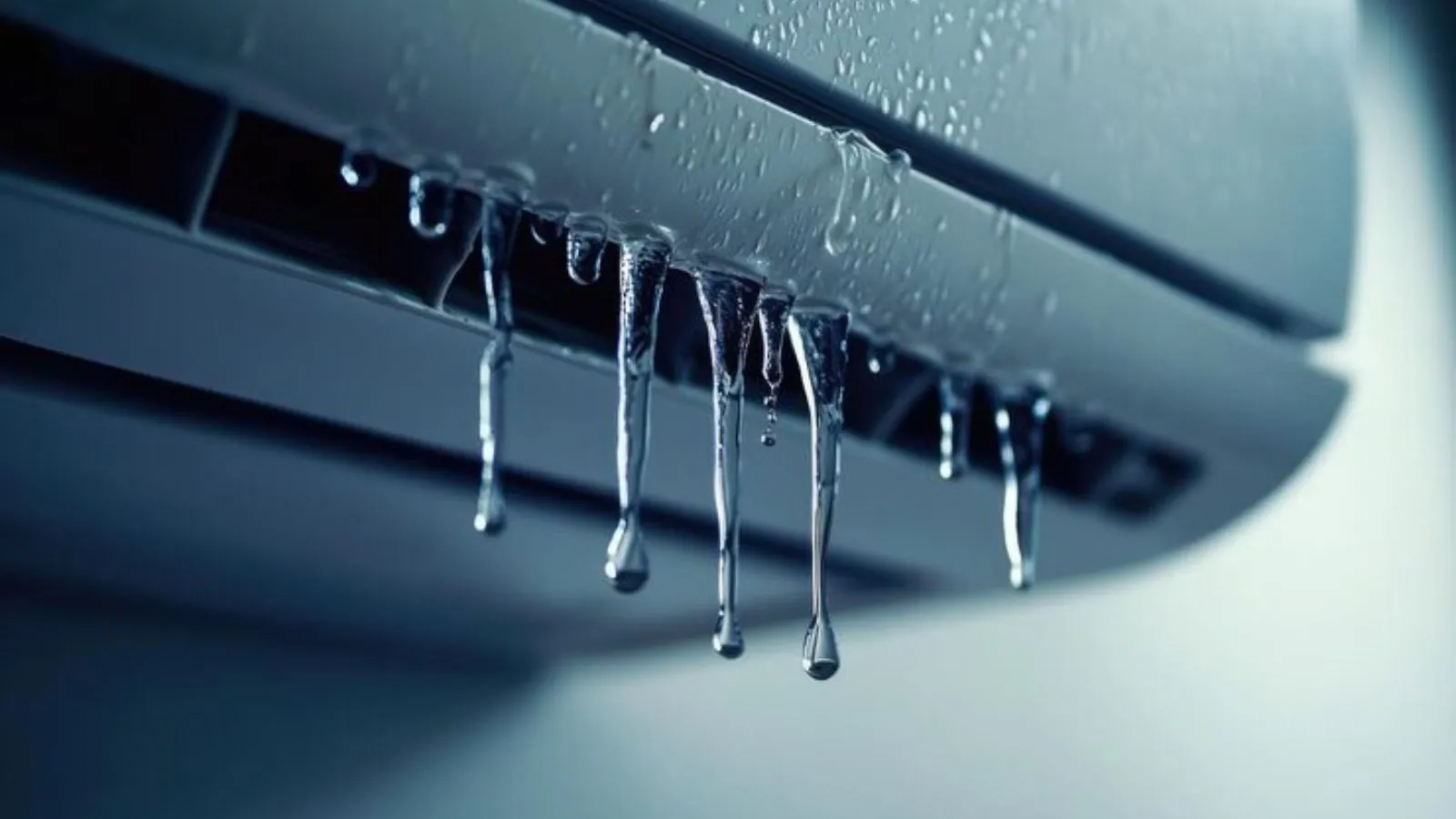
AC leak water damage repair in Rosedale, NY covers the ceilings, walls and floors soaked by a clogged condensate line, a cracked drain pan or a frozen evaporator coil. Air conditioners remove gallons of water from humid air each day, and when the drain path fails, that water ends up in your building instead of outside.
Because the leak is often slow, the damage tends to be hidden. A faint ceiling stain, a musty smell near a closet air handler or a wet drain pan are the early signs. Call (516) 845-9582 for an assessment and we dry and repair what the drip has reached.
Why air conditioners leak inside the building
Cooling coils sweat. The water drips into a pan and drains through a condensate line, usually a small PVC pipe. Algae, dust and slime clog that pipe over a season, and once it backs up, the pan overflows or the line cracks at a joint.
A frozen coil causes the same result later. Ice builds up on the coil when airflow is low or refrigerant is off, and when it melts it can overflow the pan. In attics and closets, the water soaks insulation and drywall before anyone sees it.
What to do before the crew arrives
Start with the system itself, then the water.
- Turn the thermostat to off so the system stops making condensate.
- Shut off power to the air handler at the breaker if water is near it.
- Do not step in standing water near the unit or outlets.
- Move rugs and stored items out of the closet or attic floor.
- Photograph the pan, the drain line and the wet area.
Stain growing under the air handler?
Turn the system off and call.
AC leak sources and what each does to the building
The location of the unit predicts where damage appears.
| Air handler location | Typical leak path | Common damage |
|---|---|---|
| Attic | Overflow pan, drain line crack | Ceiling stains and sagging drywall below |
| Closet or utility room | Clogged condensate line | Baseboards, carpet and subfloor |
| Wall-mounted unit | Blocked tray or poor slope | Wall staining and floor wicking |
| Basement | Drain pump failure | Concrete floor, stored items, mold-prone corners |
How the repair works
Crews start by shutting the system off and finding moisture with a meter and thermal camera. Insulation that has absorbed water is removed, because it holds moisture against drywall for weeks. Ceiling or wall sections that have swollen or softened are cut out in clean lines so the cavity can dry.
Air movers and a dehumidifier run until readings return to dry standards, and then the drywall, paint or flooring are rebuilt. Your HVAC technician should clear or replace the drain line during the same visit so the leak does not repeat.
What drives AC leak repair cost
Price depends on how long the unit leaked and what is wet. We explain scope and price before work starts.
Length of leak
A clog found after a few days is smaller than a season of drips.
Ceiling or wall area
Larger stains mean larger repair sections.
Insulation
Wet insulation must come out and be replaced.
Floors affected
Drip pans in closets can reach carpet and subfloor.
Rebuild scope
Drywall, texture and paint follow drying.
Gradual leaks are often excluded by homeowners policies, while a sudden overflow may be covered. Check your policy and ask your insurer, and keep records of when you first noticed the stain.
Preventing a repeat
Have an HVAC technician clean the condensate line each season, check the pan and install a float switch that shuts the system off if the pan fills. Replace the filter on schedule, since a dirty filter starves the coil of air and invites ice. A pan under an attic air handler is cheap protection for the ceiling below it.
AC leak notes for Rosedale
Humid New York summers make air conditioners run long cycles, which means more condensate. If you rent, tell your landlord or superintendent as soon as you see a stain, and keep dated photos.
For the ceiling damage itself, our ceiling water damage repair page explains the process, and for drying beyond the first layer, see structural drying. Homes in Lawrence dispatch from the same line, and the Village of Lawrence Building Department states that a permit is required for air conditioners and other mechanical equipment there.
Common questions
How do I know if my AC is leaking inside the wall or ceiling?
Look for a stain under the air handler, a musty smell, peeling paint near a vent or a wet pan. A moisture meter and thermal camera can confirm what you cannot see.
Can a small AC leak cause real damage?
Yes. A slow drip that runs all summer soaks insulation and drywall and can rot framing.
Do you repair the AC unit?
No. An HVAC technician repairs the unit. We dry and repair the building.
Is AC leak damage covered by insurance?
Sudden overflow may be covered, but gradual leaks are often excluded. Ask your insurer.
Need help now?
Our line is open around the clock.