
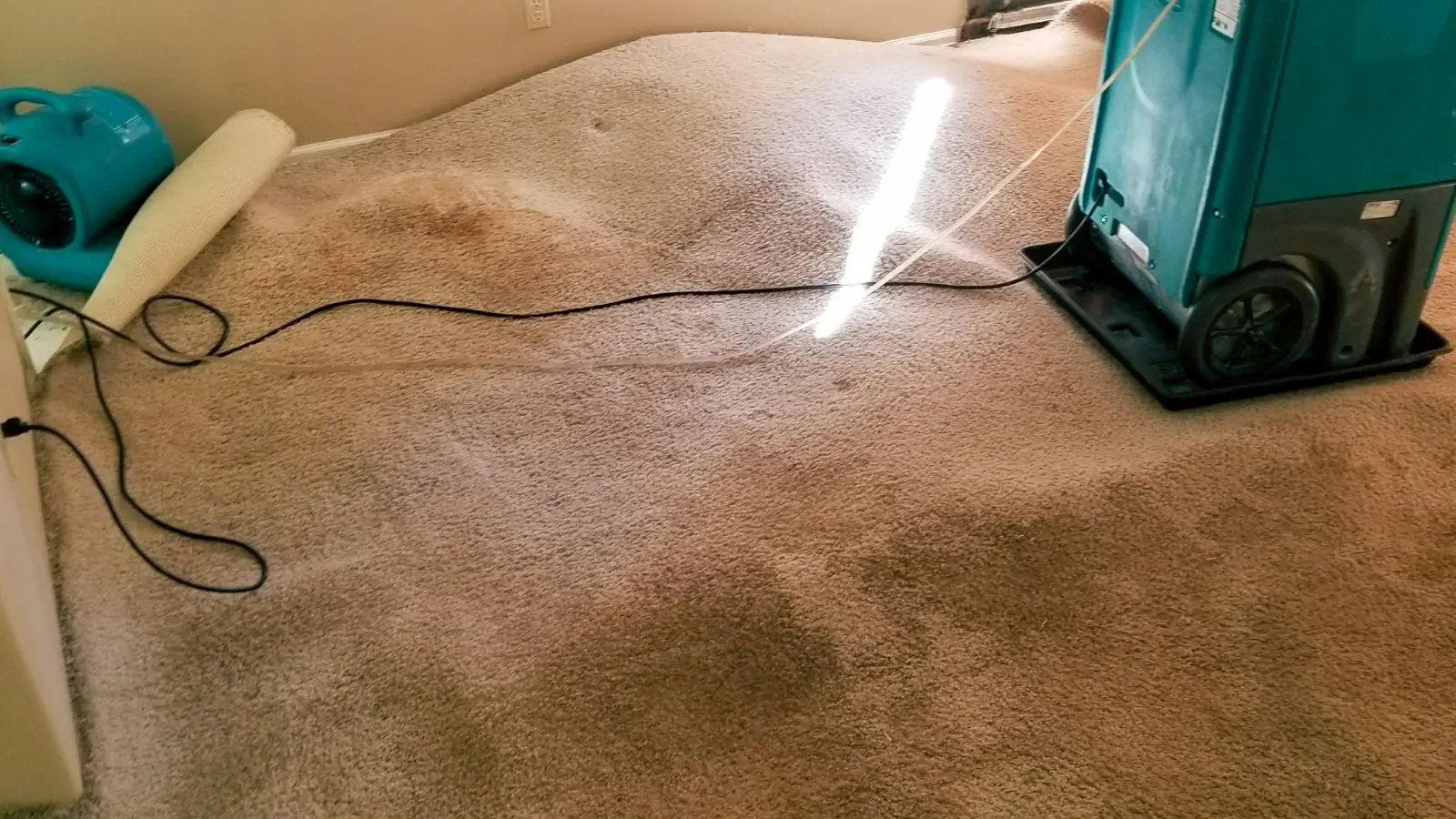
Structural drying and dehumidification in Rosedale, NY is the process of pulling moisture out of walls, floors and framing after water has been removed. It uses moisture meters, thermal imaging, air movers and dehumidifiers, and it is tracked with daily readings.
If your carpet feels damp days after a cleanup, if walls feel cool and clammy or if a room smells musty, drying may be unfinished. Call (516) 845-9582 and we measure before we decide what equipment is needed.
Wet carpet that will not dry and walls that feel damp
Homeowners often describe the problem as symptoms: a carpet that stays damp, a wall that feels cool to the touch, a floor that cups, a window that fogs in a closed room. These signs mean moisture is still in the structure.
Fans from a hardware store move air but do not remove water from the air. A dehumidifier does, and the combination is what dries building materials. The professional name for it is structural drying, and the process below explains it.
Water mitigation: the first days of drying
Water mitigation means limiting damage and starting the dry-out before repairs. Crews map moisture, remove materials that cannot be saved and place equipment so air flows across wet surfaces and humid air is pulled out.
The EPA advises drying wet materials within 24 to 48 hours to limit mold growth, so speed matters. A typical dry-out takes several days, but timing depends on the materials and the size of the loss.
Not sure it is dry?
Call us for readings.
The equipment and what each piece does
Each tool has a job.
- Moisture meters read moisture content in wood, drywall and concrete.
- Thermal imaging cameras find cool, wet areas behind surfaces.
- Air movers push dry air across wet surfaces to speed evaporation.
- LGR (low grain refrigerant) dehumidifiers pull water vapor out of the air.
- Hygrometers track temperature and humidity so readings can be logged each day.
Following the ANSI/IICRC S500 standard, drying goals are set for each material and checked daily until they are met.
How long different materials take to dry
Times vary with the loss, so these are typical relationships rather than promises.
| Material | Drying behavior | Typical approach |
|---|---|---|
| Drywall | Dries relatively quickly if clean water | Dry in place or cut and replace |
| Hardwood | Slow, may cup | Controlled drying, sometimes board removal |
| Concrete | Holds moisture for a long time | Dehumidification and monitoring |
| Framing lumber | Moderate, depends on thickness | Opened cavities and airflow |
| Carpet pad | Retains water | Often replaced |
What a daily drying log looks like
Professional drying is documented. Each visit, the technician records temperature and relative humidity in the room, outdoors and at the dehumidifier outlet, along with moisture readings at fixed points on walls and floors. Over a few days those numbers show the structure drying down toward its goal.
If a reading stalls, the crew adjusts equipment placement, opens a cavity or adds a dehumidifier. When every point meets its goal, the equipment is removed and the log goes to you for your records or your insurer.
Why drying equipment sounds loud and runs for days
The noise and the schedule both have reasons.
Air movers
Fast air across a surface carries moisture off it, so they run continuously.
Dehumidifiers
They remove vapor from the air, and a closed room works best.
Heat
Warm air holds more moisture, so a warm room dries faster.
Time
Water leaves dense material slowly, so most jobs run several days.
Closing the room and keeping equipment running without interruption is what makes drying finish sooner.
What drives drying cost
We explain scope and price before work starts.
Area dried
More square footage means more equipment.
Materials
Dense materials take more days.
Water category
Contaminated materials are removed rather than dried.
Equipment days
Longer drying means more monitoring.
Rebuild scope
Repairs follow once readings are dry.
Drying costs are often part of a covered water claim, but coverage depends on the cause. Check your policy and ask your insurer.
Drying notes for Rosedale
Queens summers bring humid air, which slows drying and means a dehumidifier does more of the work than open windows. In winter, indoor heat can help but also traps moisture in closed rooms.
See water extraction for the first phase, wall and drywall repair if material must come out and carpet water damage restoration for floors. We also serve Lawrence from the same line.
Common questions
How do you know when a structure is dry?
Moisture readings are compared to the dry standard for each material and logged daily. When they match, equipment comes out.
Why not just open windows and run fans?
Fans and open air help only when outdoor air is drier than indoor air. A dehumidifier works regardless.
Why does my carpet still feel damp?
Pad and subfloor can hold water even when the surface feels dry. A moisture meter checks.
Will drying prevent mold?
Fast drying reduces the chance, and EPA guidance points to 24 to 48 hours. It cannot be promised in every case.
Need help now?
Our line is open around the clock.