
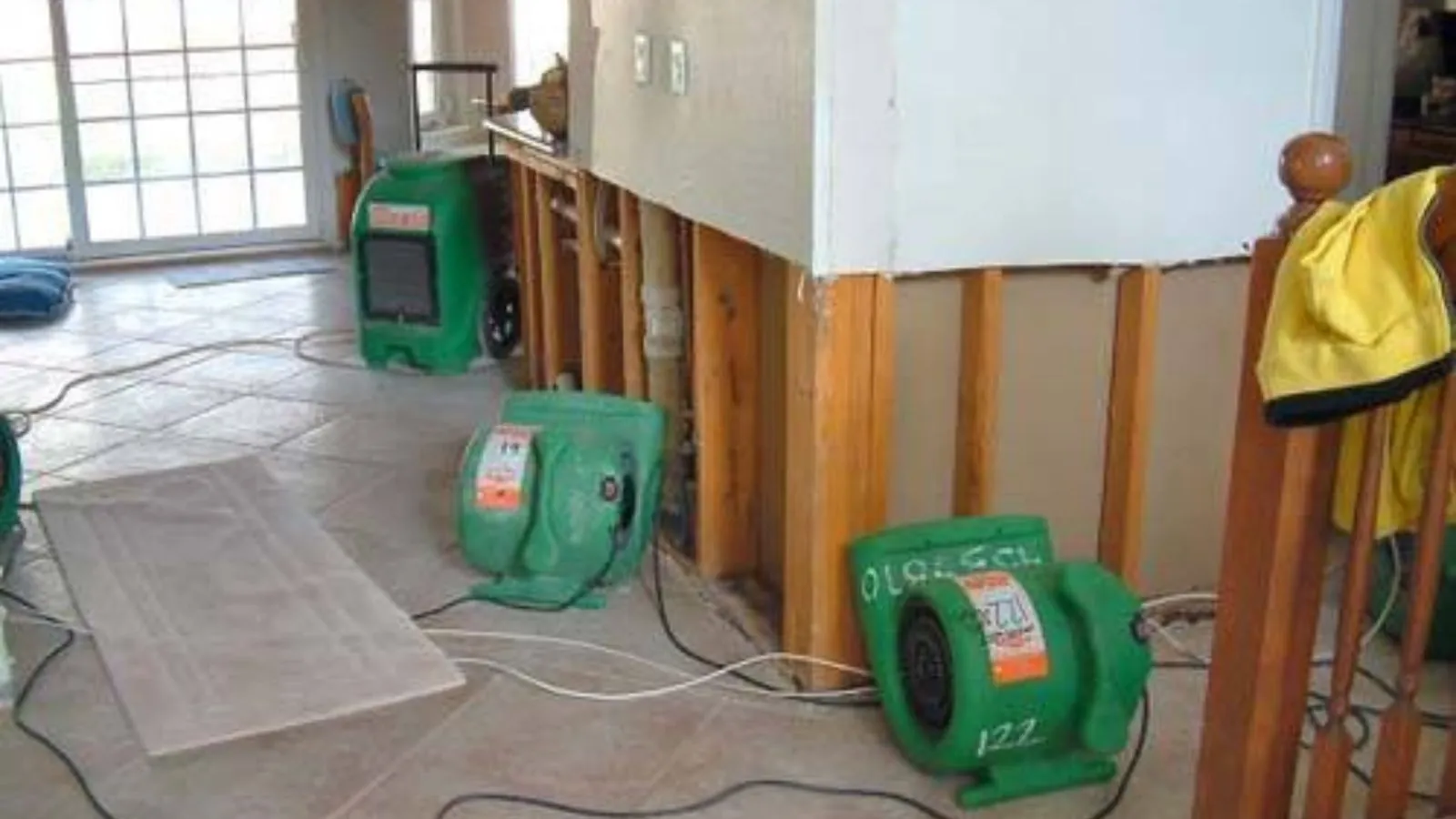
Wall and drywall water damage repair in Rosedale, NY covers walls, baseboards and trim soaked by leaks, floods or storms. Drywall wicks water upward, so a wet floor can mean a wet wall two feet above it.
Call (516) 845-9582 and we measure moisture, decide what to dry in place and what to cut out, and rebuild once readings are dry.
Baseboard and wall damage you can see
Signs include peeling paint, bubbling, brown stains, soft spots, warped baseboards and a musty smell. Pressing a thumb into drywall should meet firm resistance. If it dents or crumbles, the gypsum core is saturated.
A moisture meter confirms what you cannot see. Insulation behind the wall holds water even when the surface feels dry.
Attached homes can share walls, and our Laurelton page explains what that means for wall drying.
What to do before wet walls are opened
Wet drywall hides outlets and wiring, so be careful.
- Mark the edge of the stain with a pencil and date it.
- Turn off power to outlets in the wet wall at the breaker.
- Move furniture away from the wall.
- Do not paint or caulk over wet drywall.
- Photograph the wall and any bulge or stain.
Is the wall wet inside?
Call and we measure.
Dry in place or cut out
The decision depends on the water and the board.
| Condition | Typical decision |
|---|---|
| Clean water, quick response, firm board | Dry in place with air movers or cavity drying |
| Soft or crumbling board | Cut out and replace |
| Contaminated water | Cut out above the high-water line |
| Wet insulation | Remove and replace |
| Painted trim | Often dried or replaced |
What a repair involves
The work follows drying.
- Extract water and map moisture.
- Cut out wet drywall in clean lines, usually above the wet line.
- Remove wet insulation and dry the cavity.
- Verify that framing is dry before closing the wall.
- Hang, tape, finish, prime and paint.
Matching texture and paint takes skill, so we scope finishes separately.
Why cutting out drywall is sometimes the faster path
Cutting out a strip of wet drywall can feel drastic, but it is often the faster and cheaper path. Drywall that has been soaked loses strength, and the paper face grows mold food when it stays damp. Removing a 12 to 24 inch band above the wet line opens the cavity so insulation and framing can dry in hours instead of weeks.
Crews cut straight, clean lines so patches are easy to tape and finish. Baseboards are lifted with care when they can be reused, and numbered so they go back in the same place.
What gets checked before a wall is closed
Closing a wall too early is the most common cause of a repeat problem.
Framing moisture
Studs and plates should meet the dry standard, which a pin meter confirms.
Insulation
Wet insulation is replaced, since it slumps and holds water.
Wiring and boxes
Outlets and switch boxes in wet walls are checked by a licensed electrician before they are closed.
Paint and primer
A stain-blocking primer helps stop old marks showing through new paint.
Wiring inspection is separate from drying work, and electrical repairs must be done by a qualified, licensed electrician.
Baseboards, trim and doors
Baseboards and door casings sit right where wall water collects. Painted MDF trim swells and does not recover, while solid wood trim can often be dried and reused. Check the bottom of door jambs too, since water wicks into the end grain and the jamb can swell enough to stick.
Where trim is replaced, we number reusable pieces so they return to the same spot, and we scope paint touch-ups with the wall work so one finish covers the whole run.
What drives wall repair cost
We explain scope and price before work starts.
Height of the wet line
Higher water means larger cuts.
Wall length
More linear feet means more material.
Insulation
Wet insulation must be replaced.
Finish matching
Texture and paint matching adds time.
Drying
Cavities need equipment days.
Sudden water damage to walls is often covered. Take photos before cleanup and ask your insurer.
Wall notes for Rosedale
The NYC Department of Buildings says painting and plastering do not require a permit, though other rules still apply. A plumbing repair behind the wall must be done by a licensed master plumber.
See burst pipe water damage for pipe sources, ceiling water damage repair for ceilings and structural drying for equipment. We also serve Cambria Heights and Lawrence.
Photos and records
Take dated photos of stains before painting or removing anything, and keep samples of damaged material if your insurer asks. The DFS says to document losses before cleaning anything up.
Common questions
Can I paint over a water stain?
Not until the source is fixed and the wall is dry. Otherwise the stain returns.
How high does water wick up drywall?
Often a foot or more above the visible line, which is why cuts go above it.
Do you rebuild the wall?
Yes, after drying. Finish work is scoped separately.
Is wall damage covered?
Often if sudden. Ask your insurer.
Need help now?
Our line is open around the clock.