
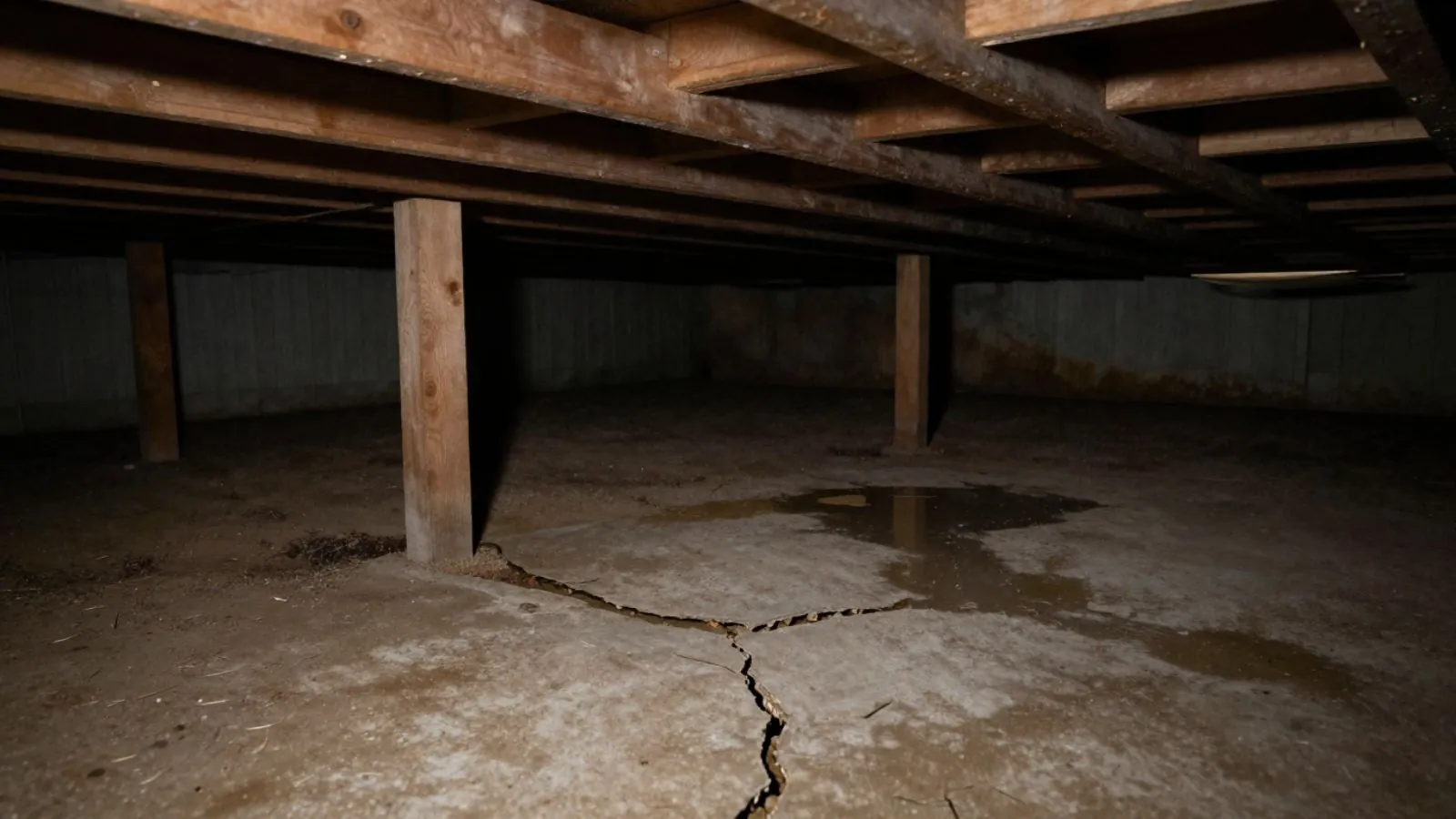
Crawl space water damage cleanup in Rosedale, NY covers the low void under a floor where groundwater, a plumbing leak or poor drainage leaves standing water, wet soil or damp insulation. The space is hard to see into, so damage often runs for a long time before anyone checks.
This page applies if your home has a crawl space. If it has a full basement instead, see basement water damage cleanup. Call (516) 845-9582 for an assessment and we plan extraction, drying and cleanup.
What goes wrong under the floor
Crawl spaces collect water from three places. Plumbing and HVAC lines run through them and leak, exterior water seeps in through foundation vents and walls, and humid air condenses on cold surfaces. Dirt floors can stay wet for weeks after a rain.
The consequences move upward. Wet joists and subfloor weaken, insulation sags and holds water, and moisture rises into floors and walls. A musty smell in the rooms above is often the first sign.
What not to do in a wet crawl space
Treat any crawl space with water as a hazard until you know otherwise.
- Do not enter if water is deep or near wiring.
- Do not run electrical tools or cords in standing water.
- Do not seal vents or cover the space with plastic before it is dry.
- Shut off the water source if a pipe is leaking.
- Photograph from the access point and note the water depth.
Floors feel soft or smell musty?
Call us for a moisture check.
How crews clean and dry a crawl space
Work follows an order so you do not pay to rebuild a space that is still wet.
- Find and stop the source, whether it is a plumbing line, a vent opening or a drainage path.
- Pump standing water and extract wet soil surfaces where possible.
- Remove saturated insulation and debris, bagging it for disposal.
- Place air movers and a dehumidifier sized for the void and monitor readings.
- Check joists and subfloor with a moisture meter before any covering or insulation goes back.
Crews enter low spaces in protective gear and follow confined-space safety. Do not go in yourself if you see standing water near wiring.
Guidance on drying low spaces
Low spaces dry slowly, so the guidance matters more here. The EPA points to a 24 to 48 hour window for wet materials, and the ANSI/IICRC S500 standard covers how drying is monitored. Ask how readings will be taken under the house.
Crawl space water sources
The source decides the fix.
| Source | Typical sign | Who fixes the cause |
|---|---|---|
| Plumbing or HVAC leak | Wet insulation under one area | Licensed plumber or HVAC technician |
| Groundwater or surface runoff | Standing water after rain | Drainage or grading contractor |
| Humidity and condensation | Damp surfaces, no puddles | Moisture control and ventilation fix |
| Sewer or drain failure | Odor and dark water | Plumber, then Category 3 cleanup |
Moisture control after the cleanup
Once the space is dry, the goal is keeping it that way. A continuous ground vapor barrier over exposed soil, with seams overlapped and sealed, cuts the amount of moisture rising into the space. Insulation that stays dry works better and lasts longer, and pipes should be insulated where cold air reaches them.
Ventilation advice differs by building and climate, so ask a qualified contractor what suits your home. A dehumidifier sized for the space is a common choice where humidity stays high.
What to look for on an inspection
A short look can catch a problem early.
Standing water or wet soil
Check after heavy rain and after any plumbing leak.
Sagging insulation
Insulation that has fallen from the joists is usually wet.
Musty smell
The smell travels upward into the rooms above.
Rusty fasteners and stained wood
These suggest long-term moisture rather than a one-time event.
If you cannot access the space safely, a contractor can inspect with a camera and a moisture meter.
What drives crawl space cleanup cost
We explain scope and price before work starts.
Access
Tight spaces take more labor.
Water amount
Standing water takes pump time.
Insulation
Wet insulation must be removed.
Contamination
Sewer water changes the category.
Rebuild scope
Insulation, vapor barrier and repairs follow drying.
Homeowners policies often cover sudden leaks but may exclude groundwater and seepage. Check your policy and ask your insurer.
Crawl space notes for Rosedale
We do not have a primary source for how many Rosedale homes have crawl spaces, so check your own building plans or an inspection report. If your home has one, note the National Weather Service reports of tidal and heavy-rain flooding near Hook Creek Boulevard and Hungry Harbor Road, because water pushed up from the ground is the main outdoor risk to low spaces.
A permit may be required for structural repairs, so ask the NYC Department of Buildings before replacing joists or framing. If you also manage property in Lawrence, Lawrence's Building Department says repairs there need a permit. Related reading: structural drying explains what drying equipment does.
Common questions
How do I know if my crawl space is wet?
Look for standing water, damp insulation, a musty smell upstairs or sagging floors. A moisture meter gives a firmer answer.
Can I dry it with a fan?
A fan alone cannot pull moisture out of soil, insulation and wood. Controlled drying uses a dehumidifier and air movers.
Do you repair the foundation or drainage?
No. A contractor handles foundation and drainage. We extract, dry and clean the space.
Is crawl space water covered by insurance?
Sudden plumbing leaks may be. Groundwater is often excluded. Check your policy.
Need help now?
Our line is open around the clock.