
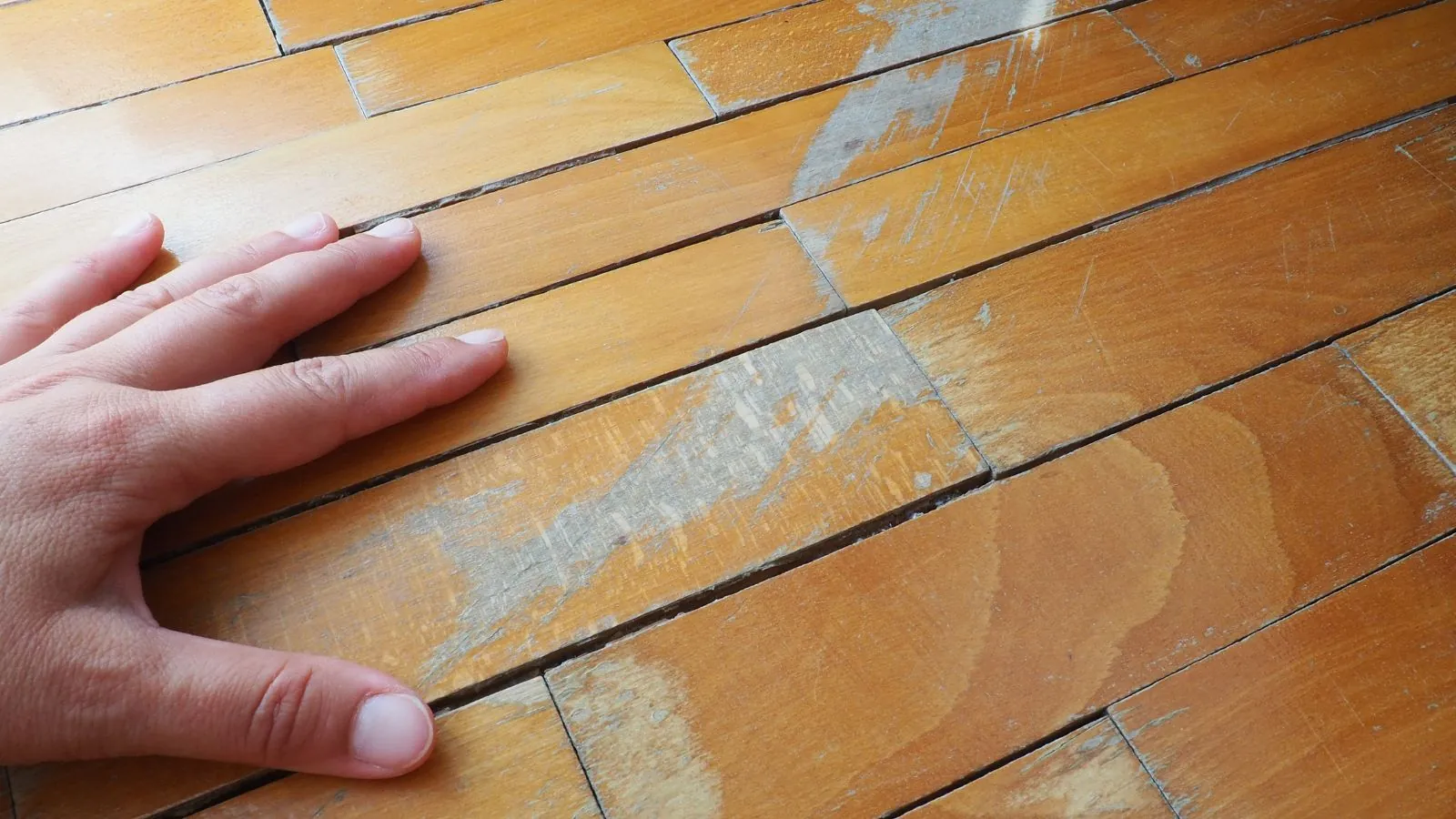
Hardwood floor water damage repair in Rosedale, NY covers solid and engineered wood flooring that has cupped, crowned, buckled or darkened after a leak or flood. Wood absorbs moisture along its length and swells across its width, which is why damage can appear days after the water is gone.
Fast, controlled drying can save floors that look ruined, and waiting can turn a few cupped boards into a full replacement. Call (516) 845-9582 and we measure moisture first.
Why wood floors cup and buckle
Cupping means the board edges rise higher than the center. It happens when the bottom of the board absorbs more moisture than the top, which is common when water enters from below, from a slab, or sits under the finish. Crowning is the opposite and often follows sanding a cupped floor too early.
Buckling is the worst case, where boards lift off the subfloor. It means water has been present for a long time or in large amounts, and replacement is often needed.
How hardwood is dried
Drying hardwood is slower than drying drywall and requires care.
- Remove surface water with extraction tools.
- Set drying mats or panels where available to pull moisture from the boards.
- Run dehumidifiers and air movers and monitor moisture content.
- Lift a few boards at the edge to ventilate the subfloor if needed.
- Wait for readings to settle before sanding or refinishing.
Sanding too early traps moisture and leads to new problems.
Floor still damp?
Call for moisture readings.
Hardwood damage stages
Each stage has a different outlook.
| Stage | What you see | Likely outcome |
|---|---|---|
| Early moisture | Slight cupping, no gaps | Often recoverable with drying |
| Cupped | Raised edges | Recoverable if dried promptly |
| Crowned or gapped | Humped center | May settle after drying |
| Buckled | Boards lifted | Often replaced |
| Black staining | Dark patches | Often replaced |
What the standards say about wood floors
For wood flooring, the published reference is the ANSI/IICRC S500 standard. It treats the boards and the subfloor together, so ask how both will be measured while they dry.
Solid versus engineered wood
Solid hardwood is milled from a single piece, so it can be sanded several times and often recovers from moderate moisture. Engineered flooring has a thin wear layer over plywood layers. It resists cupping better than solid in some conditions but can delaminate when soaked, and its thin top layer allows only limited sanding.
Knowing which you have changes the plan. Check the edge of a board at a vent opening or a threshold, where the layers can often be seen. Tell us what you find when you call so we can plan equipment and the repair options.
What not to do to a wet wood floor
A few common reactions make damage worse.
Do not sand yet
Sanding a wet floor traps moisture and can cause crowning once it dries.
Do not seal it in
Covering wet boards with rugs or plastic holds moisture against the wood.
Do not heat it hard
High heat can crack boards, so use controlled, gradual drying instead.
Do not guess at dryness
A floor can feel dry on top and still read wet at the bottom, so use a meter.
After drying, boards that remain cupped can be sanded flat, and boards that split or buckled are replaced individually where possible.
Refinishing after drying
Refinishing waits until moisture readings in the boards match the room's normal level, which can take longer than the surface suggests. A floor sanded and finished too soon can cup again as trapped water leaves.
Once readings settle, the floor is sanded flat, stained to match where needed and sealed. Boards that cannot be saved are replaced and blended in, and we scope that work separately so you see the cost before it starts.
What drives hardwood repair cost
We explain scope and price before work starts.
Wood type
Solid and engineered wood behave differently.
Square footage
Larger areas cost more to dry and refinish.
Subfloor
A wet subfloor adds scope.
Finish
Matching stain and finish matters.
Rebuild scope
Sanding and refinishing follow drying.
Sudden water events are often covered by insurance, while long-term leaks may not be. Ask your insurer and photograph the floor before cleanup.
Hardwood notes for Rosedale
The NYC Department of Buildings lists floor resurfacing as work that does not require a permit, but the contractor must be licensed through DCWP. Ask for that license before hiring anyone to refinish.
Water that rises through a basement or slab can lift floors, so see slab leak water damage and basement water damage cleanup for sources. For carpet or pad, go to carpet water damage restoration. Cambria Heights homes get the same service.
Common questions
Will cupped hardwood go flat again?
Often, if drying is controlled and the floor is given time. Do not sand until readings are stable.
Can I save a buckled floor?
Sometimes boards can be removed and replaced individually. Full buckling often means replacement.
How long does drying take?
Often several days to weeks, depending on moisture and thickness.
Is hardwood damage covered by insurance?
Sudden events often are. Ask your insurer.
Need help now?
Our line is open around the clock.