
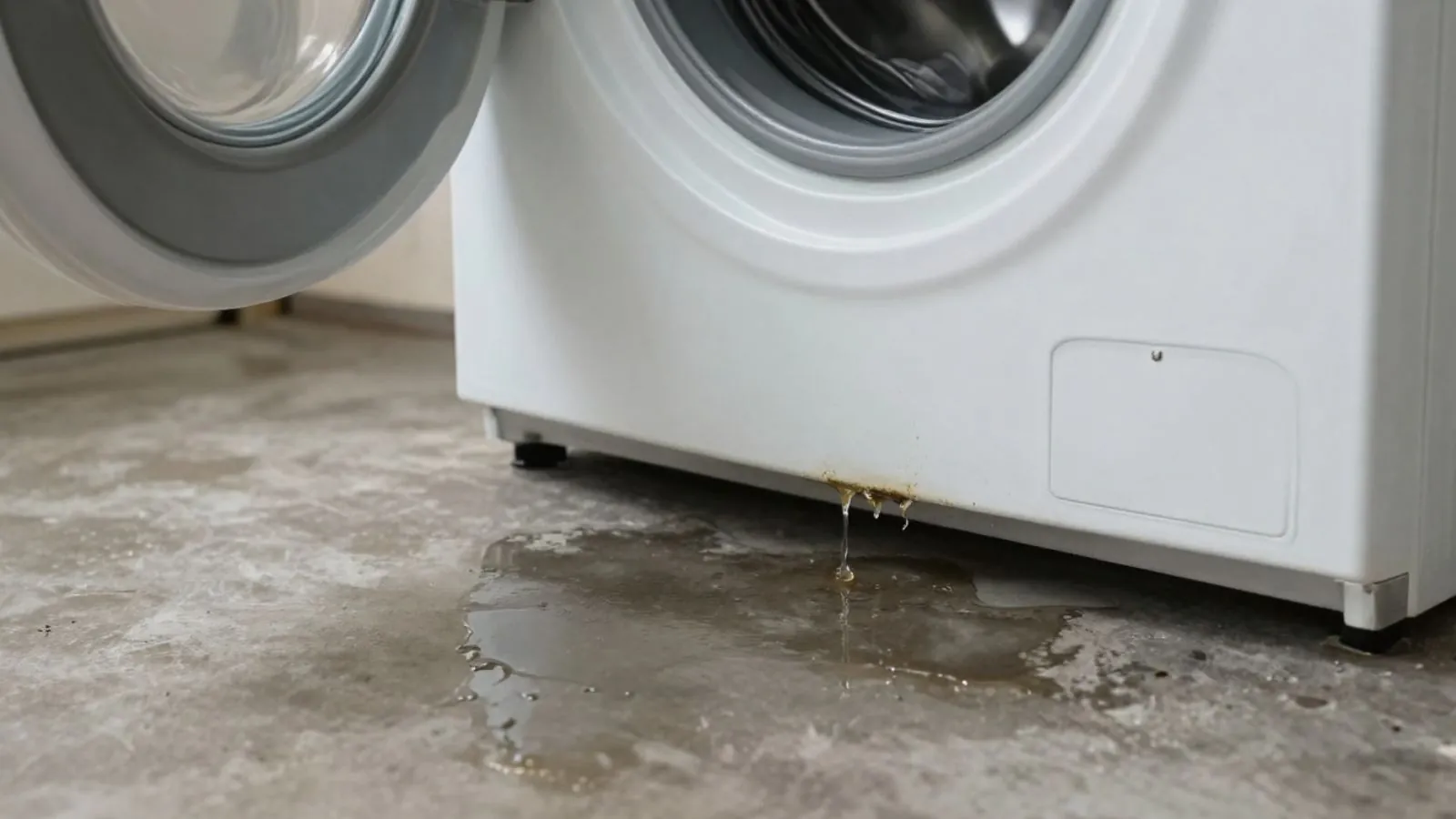
Appliance leak water damage in Rosedale, NY comes from washing machine hoses, dishwasher lines, refrigerator ice-maker connections and similar fixtures. Failures often happen while the appliance is running and nobody is watching.
This page is about the appliance and its supply or drain line. If the water reached cabinetry, see kitchen water damage restoration. For flooring, jump to hardwood floor repair or carpet water damage restoration.
Appliance leak emergency: first steps
A leaking appliance sits next to power and water, so safety comes first.
Do this first, in this order
- Close the shutoff valve behind or beside the appliance.
- Unplug the appliance only if the cord and outlet are dry and you are not standing in water.
- If the outlet or cord is wet, cut power at the breaker if you can reach it safely, otherwise call your electric utility.
- Pull the appliance forward only if the floor is not slick and you can do so without tipping it.
- Call (516) 845-9582 and tell us which appliance and which floor.
Do not run the appliance again until a technician has checked the hose or valve.
What to do before help arrives
Cut the water supply before anything else.
- Close the shutoff valve behind the appliance or the main valve.
- Unplug the appliance only if the cord and outlet are dry.
- Do not open a washer or dishwasher door to let water run out across the floor.
- Lift rugs and kitchen mats, and move small items up.
- Photograph the appliance label and the wet floor.
Water under the machine?
Close the valve and call the line.
Common appliance failures
Washing machines are the biggest source. Rubber hoses harden over time and braided supply hoses can burst at the crimp. Dishwashers leak at door seals or supply lines, and refrigerators leak from ice-maker lines and drain pans.
Water from these sources is usually clean or gray, but the dwell time matters. A leak that ran for hours soaks subfloors and adjoining rooms, and one that ran for days may have entered the wall behind.
Standards behind appliance leak cleanup
Cabinet bases and floors under a leaking washer or dishwasher are dried to the goals in the ANSI/IICRC S500 water damage standard. A company that follows it should be able to show you readings, not just fans left running.
Appliance, source and where water hides
Where water goes depends on what leaked.
| Appliance | Typical source | Where water hides |
|---|---|---|
| Washing machine | Fill hose or drain hose | Under laminate, behind baseboards |
| Dishwasher | Door seal or supply line | Cabinet floor and subfloor |
| Refrigerator | Ice-maker line | Under flooring and in the wall behind |
| Dehumidifier or humidifier | Overflow | Carpet and pad |
Appliance notes for Rosedale
Under the NYC Department of Buildings rules, ordinary plumbing and relocation work must be done by a licensed master plumber. Hose replacement on a washing machine is a homeowner task, but a new supply line in the wall is not.
If you rent in a multi-unit building in the area, tell the landlord or superintendent the same day. Our Cambria Heights and Rosedale crews work with property managers and document the loss for the owner.
Preventing the next appliance leak
Most appliance leaks are preventable with a few minutes of attention a year. Replace rubber washer hoses with braided stainless lines, and check them for bulges or rust at the couplings. Pull the washer and dishwasher forward occasionally to check the floor and wall behind them for stains.
Shutoff valves seize if never used. Turn them to confirm they work, and replace one that sticks. If you travel often, shutting off the washer supply valves between uses limits what a failed hose can release.
Warning signs of a slow appliance leak
Slow leaks give clues before the floor fails.
Musty smell near the appliance
Often means water is collecting under flooring or in a cabinet base.
Lifting floor edges
Laminate and vinyl seams lift when moisture sits underneath.
Higher water bill
A running or dripping line can raise the bill without visible water.
Damp wall behind the unit
Supply lines inside the wall can weep before they fail.
If you notice any of these, shut off the supply and call a plumber and us.
What drives appliance leak cleanup cost
We explain scope and price before work starts.
Run time
How long the leak ran sets the wet area.
Floor type
Tile dries faster than laminate or wood.
Cabinets
Cabinet bases swell and may need replacing.
Floors below
Water that reached a lower unit or room adds area.
Rebuild scope
Repairs follow drying.
Many policies cover sudden appliance leaks but may exclude gradual seepage. Ask your insurer and keep the damaged hose for the adjuster.
After the cleanup
A new hose is a cheap fix. A homeowner can replace rubber hoses with braided lines and check them yearly. For leaks tied to the supply line inside a wall, our burst pipe page explains the next steps.
Common questions
Do you handle appliance leak emergencies at night or on weekends in Rosedale?
Yes. The line is open 24/7, and we can explain what is possible the same day.
Is it safe to unplug a wet appliance?
Only if you are on dry ground and the cord and outlet are dry. Otherwise cut power at the breaker or call your electric utility.
Will you move the appliance?
Crews can work around it, but heavy appliances are usually moved by the owner or a technician.
Is an appliance leak covered by insurance?
Often, if it was sudden. Ask your insurer and keep the failed part.
Need help now?
Our line is open around the clock.